
A plan that adapts to what you actually ate, not the week you planned. You tell it what really happened, and the days ahead quietly rebalance around it. Not a calorie lecture. Just a practical swap.
Almost every meal plan assumes a perfect week, and then quietly marks you down when real life turns up. A long lunch, a late meeting, a night where dinner is whatever is in the fridge. Miss a few days and the plan is already wrong, so you stop opening it.
Adapt8 starts from the opposite place: the best plan is the one still standing on a Tuesday night when everything has gone sideways. You log what you really ate, and the plan rebalances the rest of the day and the rest of the week around it. There is no compliant or non compliant. What you ate is simply information the plan uses to adjust.
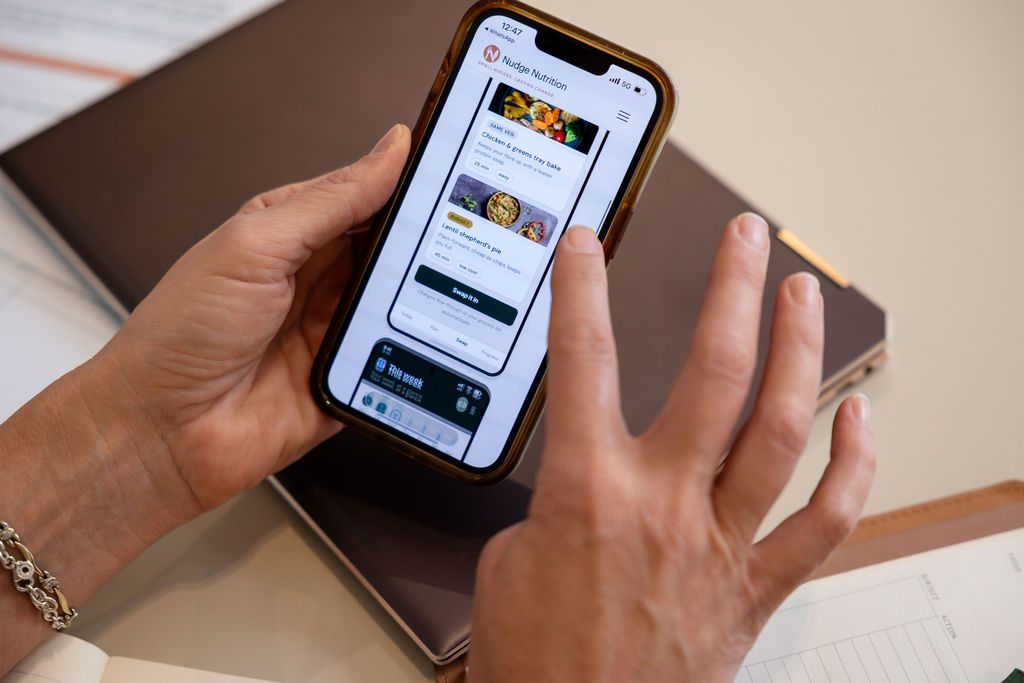
Adapt8 is built on eight ideas about how eating actually works in a real life, not an ideal one.
Log the real day, including the bit that wasn’t the plan. The days ahead rebalance around it, instead of reissuing a week you’ve already missed.
Off plan isn’t a failure, it’s information. No good food/bad food, no guilt, just one clear, doable swap.
A single screen with today’s food on it. No endless plan to browse, and no week of missed days to scroll back through.
Love or dismiss any meal. The more you use it, the more it suggests food you’d genuinely cook and eat.
Managing cholesterol? You see the fats that matter, not a generic calorie count. The numbers on screen are the ones relevant to you.
When several things are off, we work on the furthest off one first and leave the rest until that’s become a habit. One change at a time.
Every adjustment respects a safe minimum, for the day, and for the next meal. The app will never chase a big day with one that’s too small.
Goals change. The plan keeps adapting with you rather than graduating you onto a static plan and walking away.
Adapt8 is being built to sit alongside Nikki’s one to one work, as a package rather than an app you are left alone with. Package details and pricing are still being finalised.
Leave your email and Nikki will send you the Adapt8 information pack as soon as it is ready. No obligation, and nothing else in the meantime.
Prefer to ask a question first? Send Nikki a message.
Meals shaped around your goal, how you move, and the week you’re actually having.
A photo, a voice note, or a tap. Including the long lunch. Nothing gets marked wrong.
The next meal and the days ahead adjust around what you logged, not around the week you were supposed to have.
Anything left over is spread gently across the days remaining, never crammed into tomorrow.
Each one is catalogued by allergens, how it helps a given condition, budget, how hard it is to cook, and the kind of food it is, so what you’re offered fits your life, not just your numbers.
The recipe library is built deliberately rather than pulled from a third party, so the clinical logic behind every suggestion is known and controlled.
Built around what’s actually in front of you at the supermarket here, not a northern hemisphere ingredient list.
If it gets to mid afternoon and you have barely eaten, the answer isn’t an enormous dinner. Adapt8 suggests smaller, more concentrated additions across the rest of the day, enough to close the gap without leaving you uncomfortable at 9pm.
Go the other way, and it does the same in reverse: the difference is spread gently across the days remaining rather than dumped on tomorrow.
Underneath all of it sits a floor. Every adjustment, in either direction, respects a safe minimum, for the day as a whole and for the next meal. A big day is never followed by one that’s too small. That limit isn’t negotiable, whatever the numbers say.
Consistency is the measure, not perfection. The app is designed to keep you going, not to score you.
When something has genuinely shifted, a few weeks of steadier eating, it tells you, without you having to go looking.
Goals move. Rather than graduating you to a static plan, it carries on adjusting as life changes.
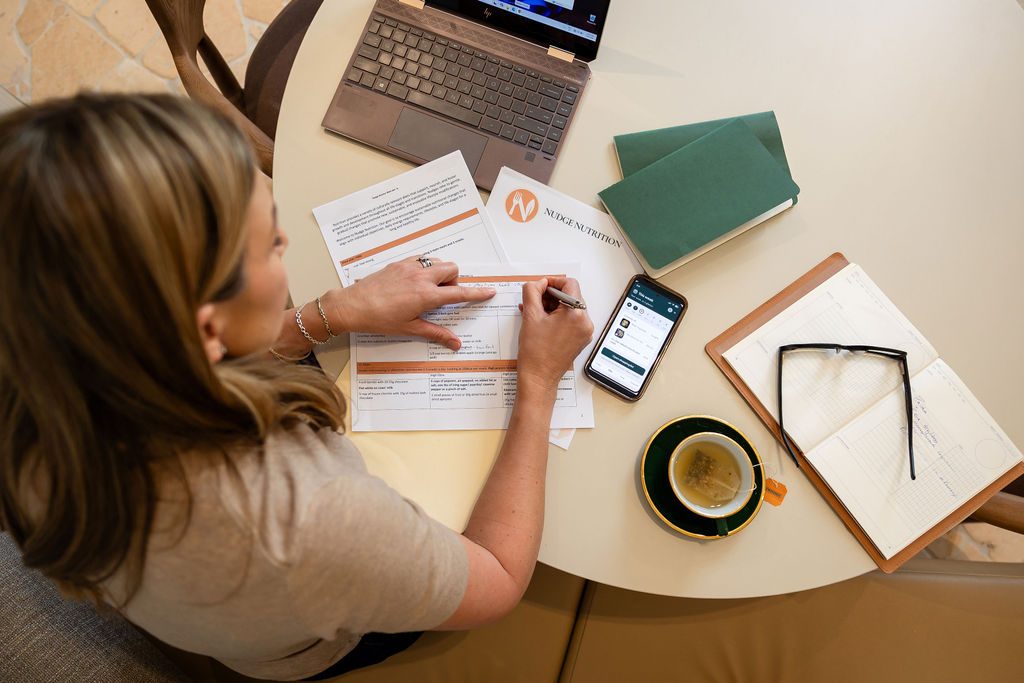
The method sits underneath every plan she writes, whether you ever hear it called Adapt8 or not. If eating that adapts to your real week sounds like the way you would want to be supported, start with a free 15 minute call.
Bookings