By Nicola (Nikki) Edwards-Kalaf · 15 August 2026
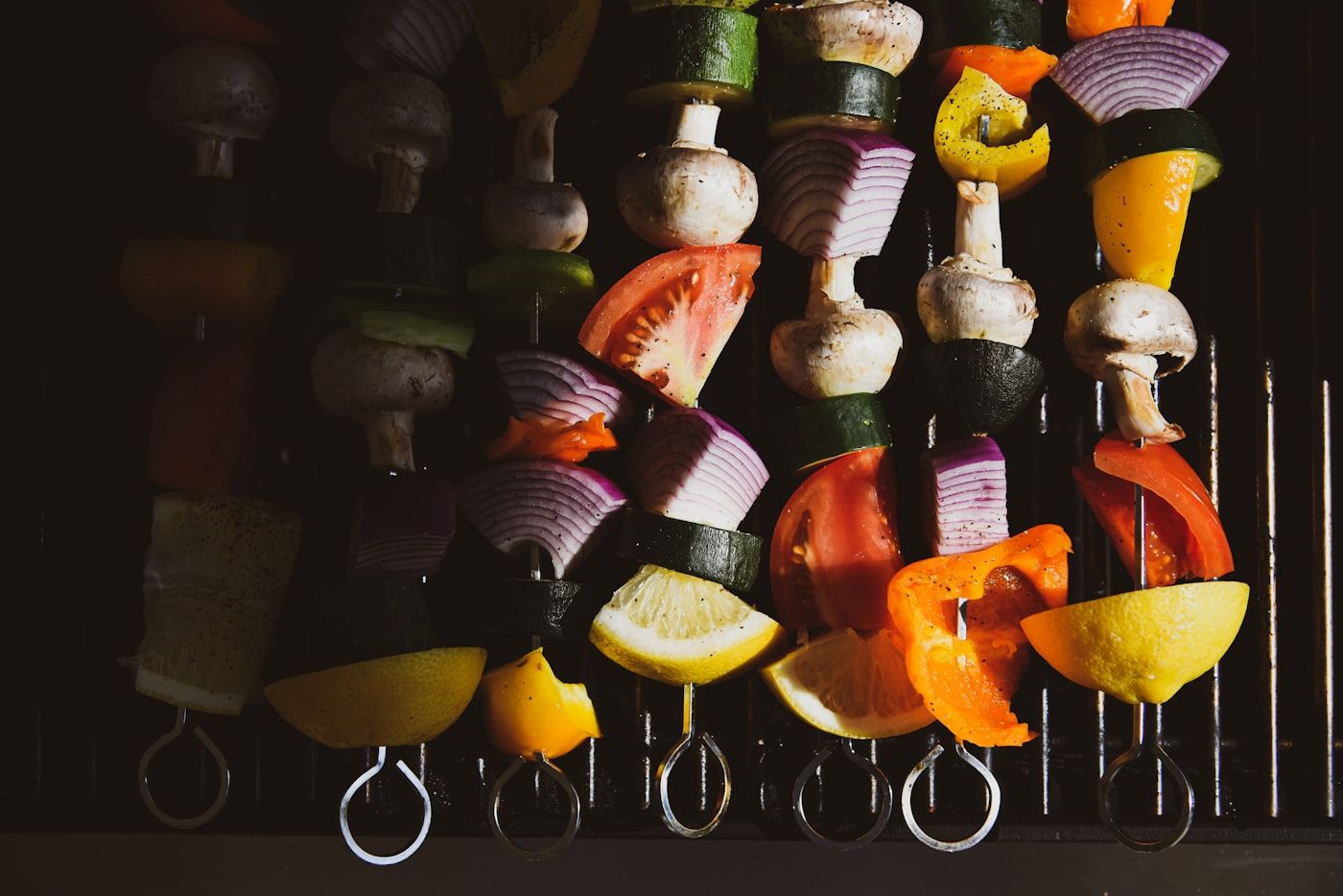
The barbecue is one of the few pieces of equipment that gets used by almost every household in the country, whatever the occasion. A birthday, a Sunday with nothing else planned, the first warm weekend after a long winter. From October onwards, as the evenings stretch out and the produce lists change, the barbecue comes out of hibernation and stays out until autumn. The usual approach is sausages, a few chops, maybe a steak if it is a special one. That is not wrong, but it is a missed opportunity. A barbecue is a cooking method, not a meat delivery system, and some of the best things to put on a hot plate or a grill are not animal at all.
This matters for reasons beyond variety. The Australian Bureau of Statistics found that in 2023, less than one in twenty people aged two and over consumed the minimum recommended serves of vegetables, legumes and beans on a usual basis. Among adults, less than one in twenty (4.3%) people aged 2 years and over consumed the minimum recommended serves of vegetables, legumes and beans on a usual basis in 2023, and the proportion was slightly higher for adults aged 18 years and over than children aged 2 to 17 years. Separately, ABS data from the 2022 to 2023 National Health Survey period showed 93.7% of Australians aged 18 years and over did not meet the guidelines for recommended daily serves of vegetables. A barbecue that is built around a spread rather than a pile of protein is one small, practical way to close a bit of that gap, without anyone at the table feeling like they are eating a health lecture instead of dinner.
None of this is about turning a social gathering into a wellness seminar. Nobody wants that, least of all the person standing at the barbecue with a beer in one hand and tongs in the other. The point is simpler: vegetables cooked on a grill taste genuinely good, they are quick, and they give a host something interesting to serve besides three types of meat that all taste roughly the same once the sauce goes on.
Grilling changes vegetables in a way that steaming or boiling never will. High, direct heat caramelises natural sugars and gives a char that most raw or boiled vegetables cannot compete with. Corn on the cob husked and grilled until it blisters, capsicum halves cooked until the skin blackens and peels back, whole mushrooms brushed with a little oil, these are not consolation prizes on the plate. They are often the first thing to disappear.
October is a good time to start thinking this way, because the produce available changes with it. Asparagus is one of the clearest markers of the season, with its supply concentrated through September to November, with Victoria producing the majority of Australia's crop. A bunch trimmed, tossed in a little oil and thrown across the bars for a few minutes each side needs almost nothing else done to it. Zucchini follows close behind as the weather warms, and by November it is cheap, plentiful and forgiving on the grill, sliced lengthways so it does not fall through the grates.
Beyond the vegetables that are genuinely at their best right now, there is a wider category of things that belong on a barbecue and rarely make it there. Haloumi holds its shape and goes golden in minutes. Whole flatbreads warmed briefly on the plate turn into something closer to a wrap than a side. Even fruit works, with peach or pineapple halves picking up a bit of char and needing nothing more than that. None of this requires special equipment or a change in how the barbecue is run. It is the same heat, the same tongs, just a wider idea of what belongs on them.
A good spread is not only about what touches the grill. The host who is also trying to enjoy the afternoon needs sides that can be made well ahead and left alone. A grain salad, built on something like barley or brown rice with whatever herbs and vegetables are on hand, sits happily in the fridge for a few hours and often tastes better once the flavours have had time to settle. A slaw made with cabbage, carrot and a simple dressing holds up far longer than a lettuce based salad, which wilts the moment it meets a warm plate.
Potato salad deserves a mention here too, mostly because it gets written off as heavy when it does not need to be. A version made with a yoghurt or olive oil based dressing rather than a thick mayonnaise, with something acidic like vinegar or lemon through it, sits just as well next to grilled vegetables as it does next to a chop.
The easiest way to shift a barbecue away from being a meat centred event is to think about the table as a whole before anyone lights the barbecue. If half the space on the table is already claimed by salads, bread and something grilled that is not meat, the meat naturally becomes one part of the meal rather than the entire point of it. This is not a rule to enforce, just a practical way to plan a shop and a cook list so the afternoon runs itself once people arrive.
None of this needs to be complicated or expensive, and it certainly does not need to come with any commentary about health at the table. A good spread speaks for itself. If you are looking for more ideas along these lines, ordinary food for ordinary Australian occasions, there is a running collection over on the Nudge Nutrition blog worth a browse before your next one.
Anyone managing a specific health condition, or who is pregnant, should treat general food ideas like these as a starting point for conversation with their own health professional rather than a set of rules to follow.
Filed under Real Australian food · all articles
Full recipes, sample days and the weekly letter, straight to your inbox. No spam, unsubscribe anytime.