By Nicola (Nikki) Edwards-Kalaf · 27 July 2026
There's a particular kind of eating that happens standing up, over the sink, or hunched at a desk between calls. It's fast, it's a bit furtive, and it's usually followed by a small internal apology. Somewhere along the way, snacking stopped being a normal part of eating and became something to admit to, as if reaching for food between meals were a lapse in character rather than what it actually is: hunger, at an inconvenient time.
This matters more for business owners than almost anyone else, because your day rarely runs on a tidy three meals schedule. Meetings swallow lunch. Stock deliveries land at odd hours. You eat when there's a gap, not when the clock says so. The problem isn't that you're snacking, it's that nobody planned for it, so the options left standing are whatever's closest, which is usually something from a packet that leaves you hungry again in forty minutes.
Australians are, by national data, already eating well below the recommended amount of the food groups that make snacking worthwhile. The Australian Bureau of Statistics reported that in 2023 to 2024, per capita daily consumption sat at 2.2 serves of vegetables and legumes against a 5.0 serve recommendation, and 1.3 serves of fruit against a 2.0 serve recommendation. Meanwhile, discretionary foods made up 38.5% of total dietary energy, exceeding the World Health Organisation's recommendation for free sugars the following year. None of that is a personal failing, it's a population level pattern, and it tells you something useful: the gap between what we eat and what fills us up well is often filled at snack time, by default, not by design.
CSIRO's own research backs this up from a different angle. Their national habits survey found chocolate was the top tempting food at 72 per cent, closely followed by cheese at 61 per cent, and bread rolls at 52 per cent. These aren't unusual cravings, they're close to universal. The issue was never that these foods exist in your day. It's that when a snack isn't planned, the most available option wins by default, and then gets treated as a slip rather than a supply problem.
A snack between meals has one practical job: it stops a three hour gap from turning into a starving, poorly considered decision at 4pm. That's it. It's not a test of willpower, and it's not a smaller, guiltier version of a meal. Treated properly, a snack is a small, deliberate combination that holds you steady, enough substance to actually do something, not just a token bite that's gone in ninety seconds and leaves you back at the pantry twenty minutes later.
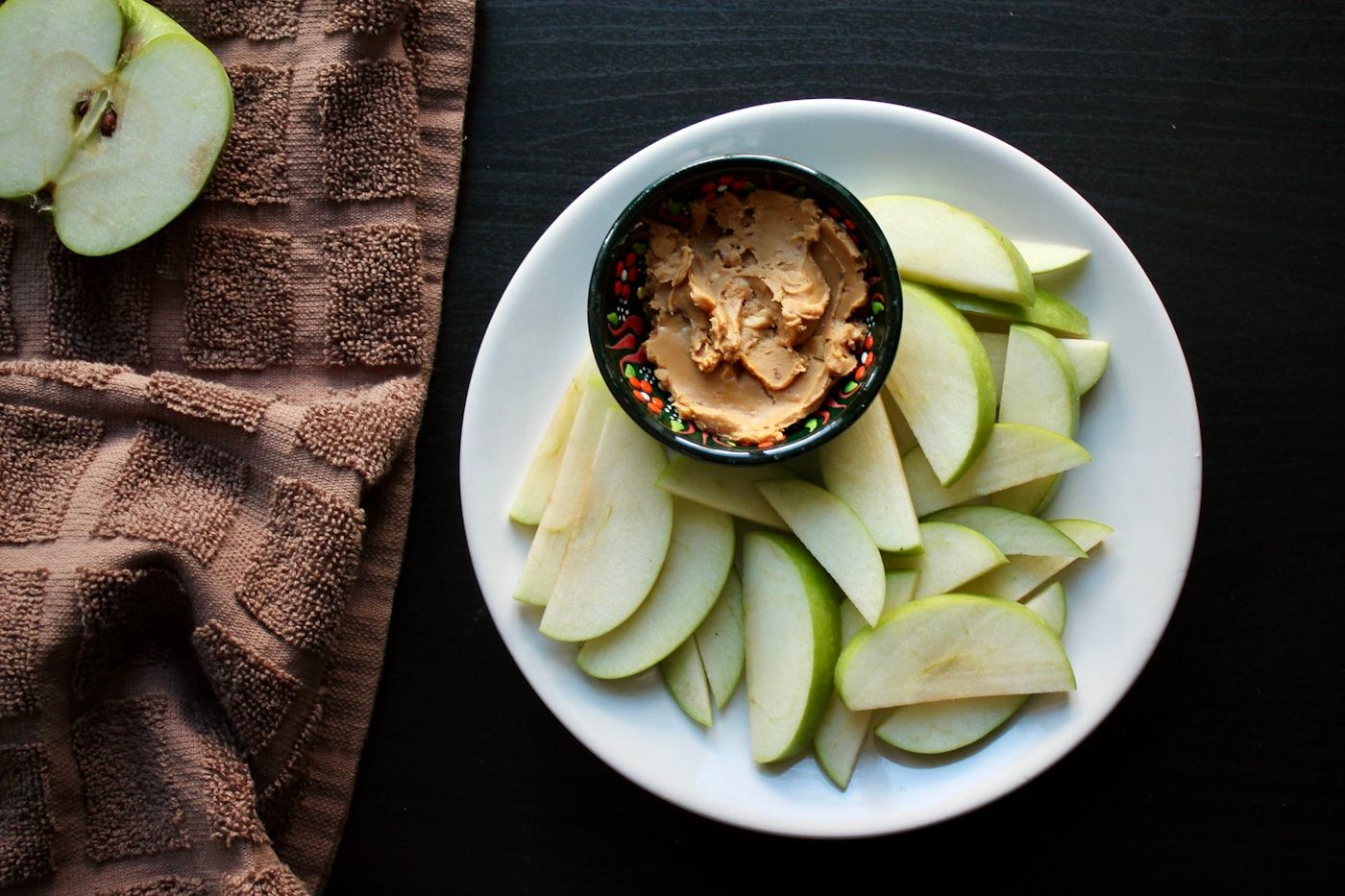
The combinations that hold share a pattern: something with a bit of protein or fat, paired with something with a bit of bulk or flavour. Apple with peanut butter is the classic for a reason, the fruit's sugars land more gently with fat alongside them. A small tub of plain yoghurt with frozen berries stirred through works the same way and takes about ninety seconds to assemble. Wholegrain crackers with cheese and a few slices of cucumber covers the CSIRO's most craved food (cheese) without pretending it's a problem to be avoided. A boiled egg with a handful of cherry tomatoes travels well and needs no plate. Even a small handful of nuts with a piece of dark chocolate is a considered snack rather than an accidental one, provided it was chosen ahead of time rather than found at the bottom of a bag out of desperation.
The difference between a snack that works and one that leaves you frustrated is almost never the food itself, it's whether it was there when you needed it. This is a supply chain problem before it's a nutrition one, and business owners already understand supply chains.
The one thing worth doing today: spend ten minutes restocking a drawer, a bag, or the office fridge with two or three options you actually like, in a form you can grab without thinking. That's the whole strategy. If cheese and crackers are already portioned in the fridge, you'll reach for them. If the only thing within arm's reach is what's left in the biscuit tin from a client meeting, that's what you'll eat, not because you lack discipline, but because that's what was there.
It's also worth noticing when your snacking clusters around the same time each day. If it's consistently mid morning, that's not a mystery to be solved with more resolve, it's information about how your day is structured, and it means packing for that gap the way you'd pack for a client meeting you know is coming.
None of this requires tracking, restricting, or treating any food as off limits. It requires deciding, ahead of the hungry moment, what you'll reach for, because a decision made at 10am when you're calm holds up far better than one made at 3pm when you're not. Snacking isn't the problem to fix. Under planning it is.
If you'd like a hand building an eating pattern that actually fits how your business runs, rather than one you have to apologise for, that's exactly the kind of practical, individual work we do together. You can find out more about working one on one and start building a way of eating that holds up on your busiest days, not just your calmest ones.
Filed under Everyday nutrition · all articles
Full recipes, sample days and the weekly letter, straight to your inbox. No spam, unsubscribe anytime.